On Saturday, July 25, 2026, the streets around JR Shinjuku Station transform into Japan's largest urban stage for Okinawan eisa dance. Around 23 troupes from across Japan will fill the station’s east and west exits with drums, chants, and colourful costumes from early afternoon until night, an unforgettable way to experience Okinawan culture without leaving Tokyo.
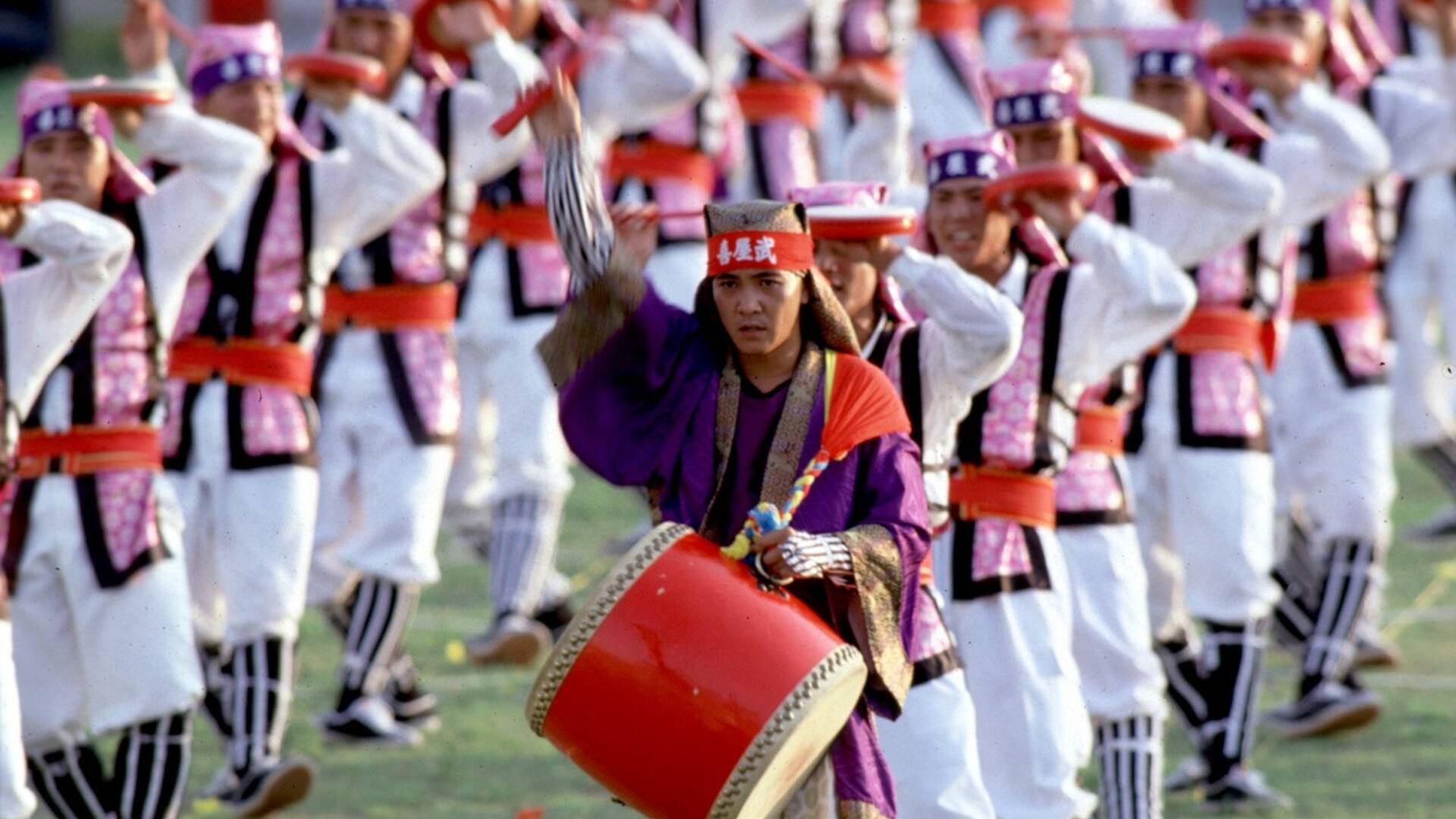
What is Eisa?
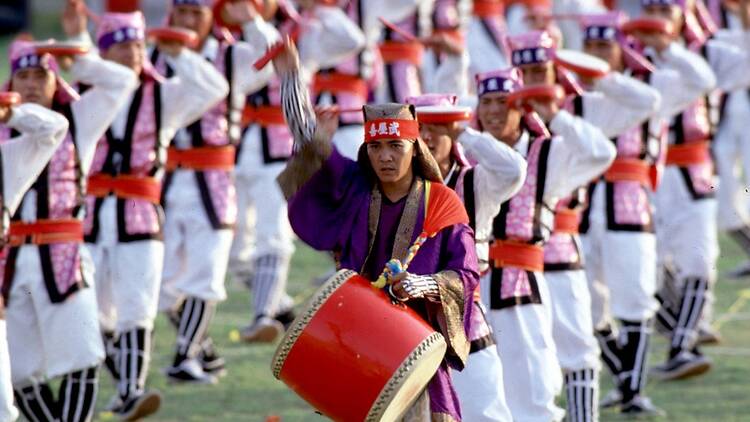
Eisa is a traditional Okinawan drum dance originally performed during the Obon season to honour ancestors and guide visiting spirits. Dancers move in tight formation while striking paranku (small drums) and larger barrel drums, accompanied by songs shouted in the Okinawan language. Modern creative eisa adds faster choreography, electronic bass, and costumes in vivid reds, blues, and golds.
Event Overview
- Dates: July 25, 2026
- Location: Shinjuku, Tokyo (JR Shinjuku Station East & West exits)
- Time: 13:00–20:00
- Entry: Free
Schedule & Venues
Day Session
13:00 – 17:00 along Shinjuku Street. The afternoon programme is the best time to watch full troupe performances on a single stage. Arrive before 13:00 if you want a front-row spot along the barriers.
Night Session
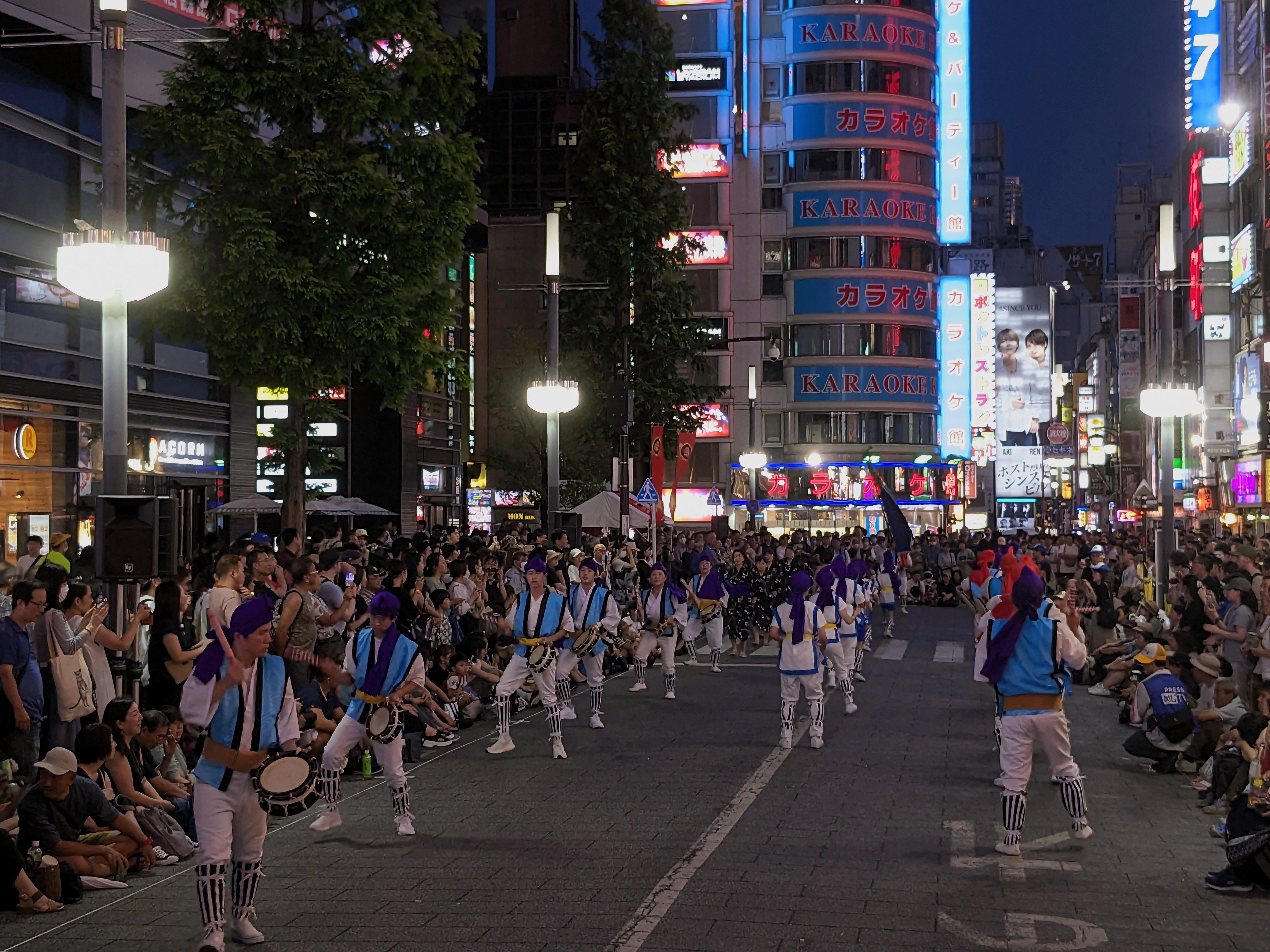
18:00 – 20:00 across six locations. The evening moves to six illuminated spots around Shinjuku Station’s east and west exits. The lanterns and neon of Shinjuku give the Okinawan rhythms a distinctly Tokyo atmosphere.
What to Expect
- 23 troupes, one city stage, youth groups, university clubs, creative teams and children’s squads from Okinawa and mainland Japan perform back-to-back.
- Massive crowds, previous editions have drawn well over 800,000 spectators.
- Traditional and modern styles, some groups keep the solemn Obon feel, while others turn the street into a high-energy dance floor.
- Photo opportunities, performers are used to cameras; low angles near the barriers capture the drums and costumes dramatically.
History of the Festival
The Shinjuku Eisa Festival began in 2002, when local shopping-district organisers invited an Okinawan performance group to bring summer energy to the area. What started as a one-off cultural exchange became an annual fixture, and over two decades Shinjuku has made the festival its own, distinct from Okinawan village festivals, yet respectful of the tradition behind them.
Viewing Tips
- Beat the heat: Late July in Tokyo is hot and humid. Bring water, sunscreen, a portable fan, and a hat. Umbrellas block the view, so a wide-brim hat is better.
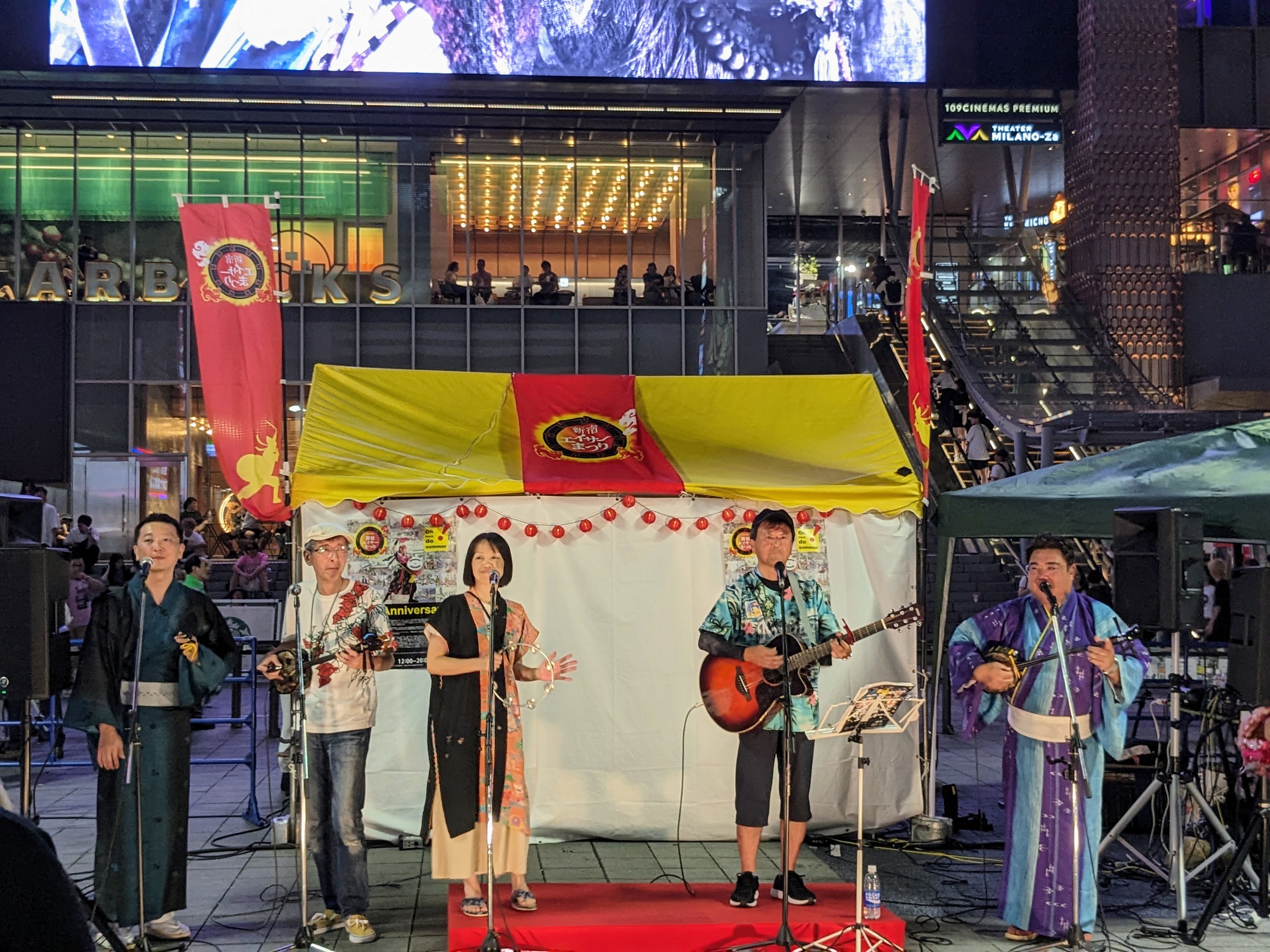
- Stay mobile: The single stage is along Shinjuku Street for the day session, but the evening splits into six locations. Pick one spot early for the night performances.
- Rain or shine: The festival proceeds in light rain. Only severe weather will cancel it. Check the official site on the morning of the 25th.
- Combine with dinner: Shinjuku has endless food options. Book an early dinner around the east exit, watch the night session, then explore Kabukicho or Omoide Yokocho afterwards.
Access
The festival is centred on Shinjuku Station. Use the JR Yamanote Line, Chuo Line, Saikyo Line, Shonan-Shinjuku Line, Keio Line, Odakyu Line, Tokyo Metro Marunouchi Line, or Toei Shinjuku Line. From the east exit, head toward Shinjuku Street; from the west exit, look for the six satellite stage areas around the station plaza.
Sources & Official Links
- Official Shinjuku Eisa Festival website
- Shinjuku Eisa Festival 2026, Japan Travel
- Shinjuku Eisa Festival, Okinawa Move
- Shinjuku Eisa Festival, GO TOKYO
- Shinjuku Eisa Festival, Tokyo Cheapo
Looking for the full event schedule, map and tips? Visit the Shinjuku Eisa Festival event page or browse all Shinjuku events.